by The Editors on October 2, 2007
 According to a post on Exportlawblog.com, the Carlsbad-based life sciences company Invitrogen has agreed to a settlement of $30,000 with the Bureau of Industry and Security for “three shipments and one attempted shipment of human leukocyte antigen tissue typing trays to Syria without a license.”
The shipments and attempted shipments had been made, and voluntarily disclosed, by Dynal Biotech, which Invitrogen acquired in 2005. The charging documents allege that these shipments and alleged shipments violate General Order No. 2 of Part 736 of the Export Administration Regulations which forbids exports of all items “except food and medicine” to Syria.
Exportlawblog.com goes on to say that by the letter of the law Dynal Biotech did nothing wrong, as tissue typing trays are clearly medical equipment that is included in the export exclusions. It was, however, cheaper to settle than to fight. . . and apparently much smarter from a business perspective.
[Link: Exportlawblog.com]
by The Editors on October 2, 2007
And another story from the “Carlsbad science companies we don’t understand” file:
Invitrogen Corporation, a provider of essential life science technologies for research, production and diagnostics, announced today it has entered into a licensing agreement with Natural Selection, Inc. to make new microRNA sequences available to researchers. This agreement enables Invitrogen to provide the most comprehensive human and mouse microRNA arrays on the market.
Oddly, Natural Selection, Inc. (a sophisticated computational intelligence algorithms company) is heavily involved in the “defense” industry if you know what we mean. It’s all a mystery to us.
[Link: Bioresearch Online]
by The Editors on September 7, 2007
Every once in a while we like to remind ourselves that Carlsbad is home to some really big-brain businesses. You know, companies with advisory boards that are chaired by infamous Nobel laureates and such. Check this one out:
Cambridge-based Alnylam Pharmaceuticals Inc. reports it has teamed up with a fellow biotechnology firm to launch a jointly owned California startup to commercialize drugs made with microRNA, or miRNA. . . . Regulus Therapeutics LLC, based in Carlsbad, Calif., plans to combine technologies from Alnylam and Isis Pharmaceuticals Inc., also of Carlsbad. The joint venture also features a separate management team, board of directors and scientific advisory board, chaired by Nobel laureate David Baltimore, officials said.
Or this:
Patriot Scientific Corporation, a leading intellectual-property licensing company, today announced that DMP Electronics Inc. of Taiwan has purchased an implementation license to the company’s microprocessor patent portfolio for use in DMP’s semiconductor devices.
It’s like we’re living in Southern California’s hot bed of smart and we don’t mind it a bit.
[Links: Biz Journals and CNN/Money]
by The Editors on August 30, 2007
 Carlsbad’s Invitrogen Corporation (the life science technologies company) has been awarded the contract to provide “kits for detecting possible E. coli 0157 contamination in food at the 2008 Summer Olympic Games in Bejing, China.
“Bacteria, particularly E. coli, can present a serious threat to public health at a major global event such as the Olympics,” said Paul Kinnon, Vice President of Applied Market at Invitrogen. “Invitrogen’s Dynabeads® are a reliable, accurate solution for keeping food safe from dangerous bacteria and a perfect example of how technologies developed to further basic research can also be used to protect what we eat and drink.”
We’re wondering if they sell to the general public as a couple of those test kits would be the perfect thing to take our our next surf trip to mainland Mexico.
[Link: Businesswire]
by The Editors on August 28, 2007

If you weren’t up this morning at 3:37 AM to check out the eclipse it looked a little something like this (out our bedroom window) as the earth started moving out of the way and putting a little light on the upper edge. (Click the image to see it larger.)
by The Editors on August 27, 2007
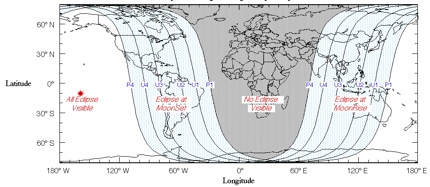
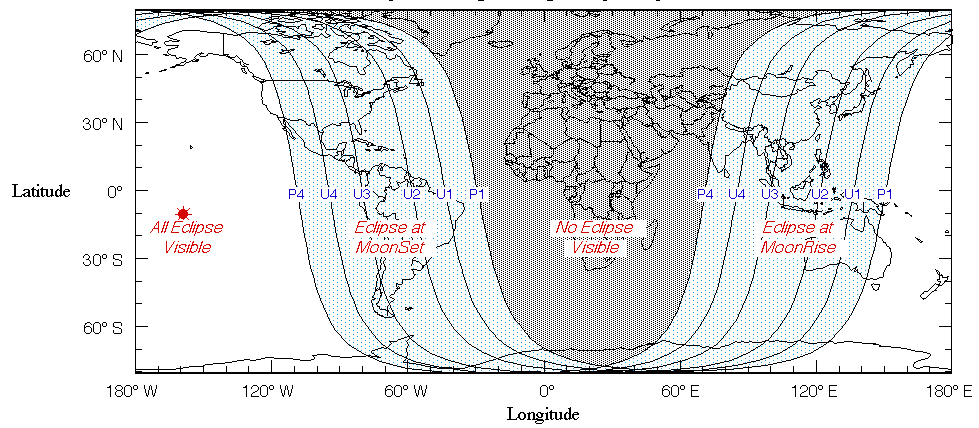
Sorry about the short notice, but tomorrow morning (August 28) starting at 12:53 AM the moon will begin its trip into the shadow created by the earth. By 3:37 AM the moon will be completely eclipsed. The good news is that Carlsbadistan is one of the epic locations to watch the entire event. Here’s what NASA has to say:
All of North America will witness some portion of the eclipse, but western observers are favored. The early penumbral or umbral phases will be in progress at moonset for observers in Maritime Canada. From the eastern USA, the Great Lakes region and Ontario, the Moon sets in total eclipse. Only observers to the west of the Rockies (including Alaska) will be treated to the entire event.
If we’re up (which we doubt) we’ll try and snap a photo. All the Monday night revelers might want to stay up a little longer after stumbling home from Dini’s and check it out from the sea wall.
[Link: NASA]
by The Editors on August 7, 2007
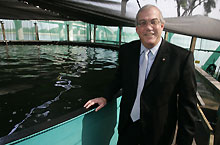
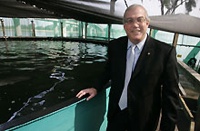 We’ve always wondered what the story was behind that fish hatchery at the south end of Garfield on the Agua Hedionda Lagoon. Well, turns out it’s part of the Hubbs-SeaWorld Research Institute. And the president of that company, Donald Kent, is profiled today in the San Diego Union Tribune. He explains what it’s all about.
The hatchery program’s goal was to do something that had never been done before: take white sea bass from the wild and spawn them in the hatchery. Then, with the help of sport fishermen, grow the juveniles in cages situated off the coast from Santa Barbara to San Diego.
It’s good to know that science and the Southern California fishery are benefiting from the profits SeaWorld extracts from its cellblock of performing animal prisoners.
[Link: San Diego Union Tribune]
by The Editors on July 14, 2007
 In these days of Oceania vs. Eurasia style threats from almost fictional sounding terrorist organization it’s nice that local Carlsbad companies are doing their part to make the world a safer place. Invitrogen, the Carlsbad based provider of “essential life science technologies for disease research and drug discovery” has announced:
. . . that their subsidiary Invitorgen Federal Systems has recently signed a $3.9 million contract with the Defense Threat Reduction Agency for the development of a prototype hand-held device for the detection of multiple biothreat agents in a single sample.
Sounds a lot like a Tricorder to us.
[Link: GovCon.com]
by The Editors on June 30, 2007
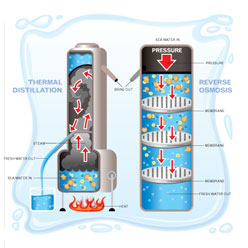
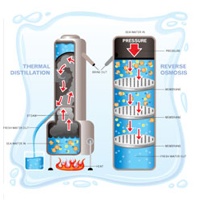 Depending on how the permitting process goes, Carlsbad could be home to the world’s largest desalination plant. That all sounds fine, but what does it mean? Luckily for us Amy Westervelt has written a comprehensive story for the Sustainable Industries Journal in which she outlines the process, the politics, and the environmental issues associated with removing fresh water from ocean water.
The waste product created by the desalination process is a briny solution that is twice as salty as the ocean water it comes from. A desalination plant produces 50 million gallons of freshwater for every 100 million gallons of ocean water it takes in, according to Cooley, co-author of a 2006 report entitled “Desalination, with a Grain of Salt: A California Perspective.” Typically, the 50 million gallons of brine created by the desalination process are dumped back into the ocean.
That’s part of the reason that The Surfrider Foundation is fighting the Carlsbad plant. As General Electric’s project moves forward it’s important that we all have a better understanding of exactly what this means for Carlsbad and for the Coast.
[Link: Sustainable Industries]
by The Editors on June 19, 2007
Carlsbad isn’t all golf, eyewear, and screen printed T-shirts. No. There is some serious science going on in these hills. In fact, Invitrogen Corporation has just announced that it’s launching a new “engineered stem cell line” that will help researchers and possibly medical ethicists.
Acccording to brainiac Joydeep Goswami vice president, stem cells and regenerative medicine this is how it works:
The BG01v/hOG cell line is a tool that can make stem cell research faster, easier and more reliable. It is crucial for stem cell researchers to know if the cells they are working with are still pluripotent, or if they have already begun to differentiate. With this line, they can quickly make that determination and simultaneously monitor whether their media composition is optimal for keeping the cells undifferentiated.”
Huh?
[Link: BioResearch Online]
 According to a post on Exportlawblog.com, the Carlsbad-based life sciences company Invitrogen has agreed to a settlement of $30,000 with the Bureau of Industry and Security for “three shipments and one attempted shipment of human leukocyte antigen tissue typing trays to Syria without a license.”


 RSS Feed-Posts